

Freight Forwarders Are Operating on Broken Tech, A New Report by Softlink Global Explains What Needs to Change
Logi-sys unified freight software
A research report from Softlink Academy outlines the seven-layer technology framework freight forwarders must adopt to achieve real operational control in 2026
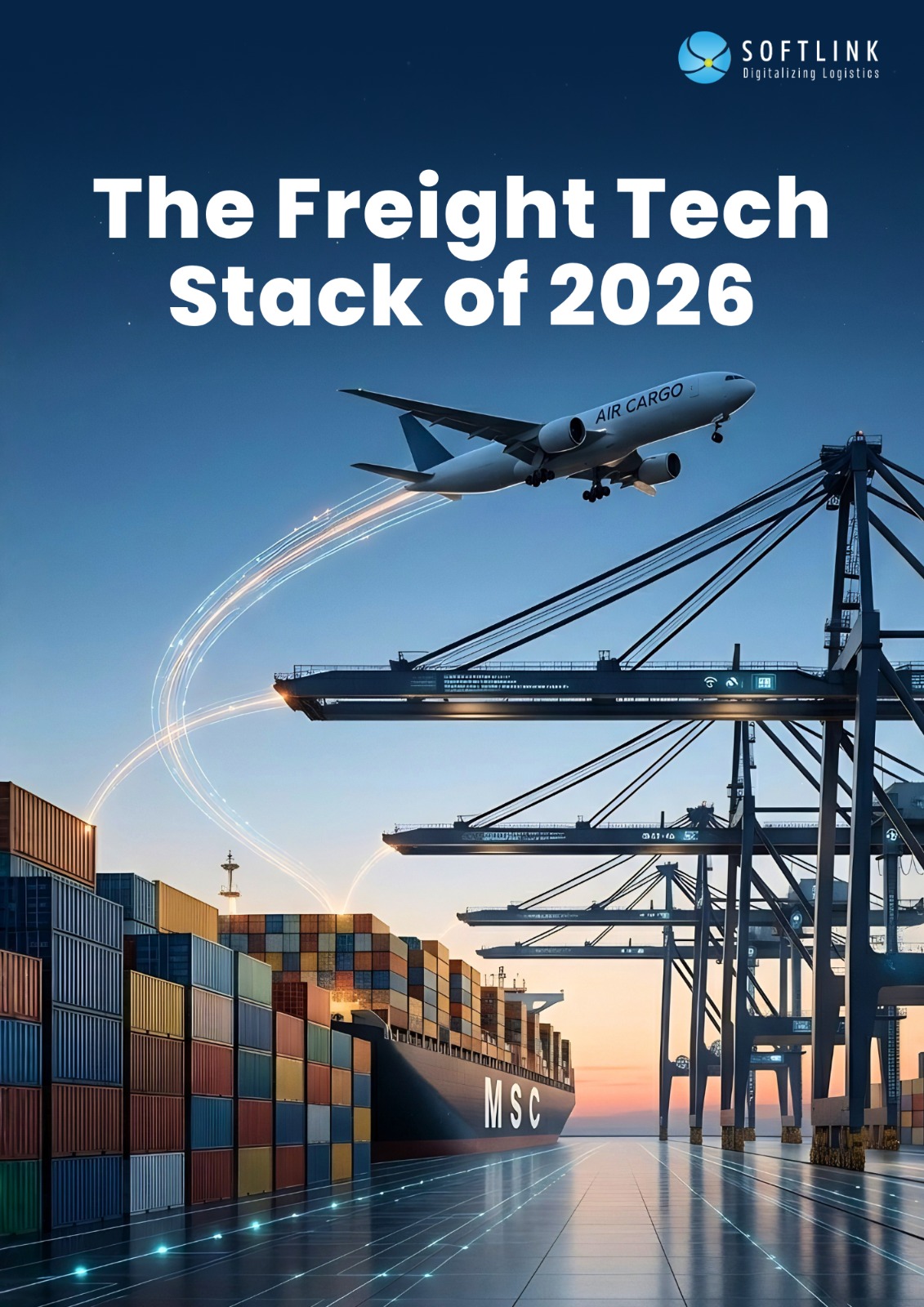
GEORGIA, CA, UNITED STATES, May 26, 2026 /EINPresswire.com/ -- Softlink Academy, the research and education arm of Softlink Global, has published The Freight Tech Stack of 2026, a report that cuts through the noise around logistics digitization to address a more fundamental problem: the systems freight forwarders rely on today were never designed to work together.
The report frames a critical industry inflection point. Where 2024 drove widespread pressure to go digital, 2025 exposed the uncomfortable truth that digitization without integration produces the illusion of progress, not actual control. Softlink describes this next phase as "Operational Convergence", a shift where the value of any system is measured by how seamlessly it connects with everything around it.
Softlink Global works with freight forwarders and logistics businesses across 50+ countries, and the operational patterns observed across that network form the backbone of this report's findings.
Why the Current Model Is Failing
Walk into most freight forwarding businesses today, and you will find the same setup: a separate system for operations, a different one for finance, a CRM that does not talk to either, and spreadsheets filling the gaps between all of them. It functions until it does not.
The report is direct in its assessment: what most forwarders call a tech stack is actually a collection of disconnected tools held together by manual effort. The cost of this shows up as duplicated data entry, compounding errors, slower response times, and revenue leakage that is nearly impossible to trace because no single system holds the full picture.
"The freight industry does not need more disconnected tools. It needs systems that talk to each other, share the same data, and give management control before problems become losses," said Amit Maheshwari, Founder and CEO of Softlink Global.
Access the complete ‘The Freight Tech Stack of 2026’ report here: https://www.softlinkglobal.com/knowledge-hub/freight-techs-tack-2026
The Framework: Seven Layers Every Forwarder Needs
The report's core contribution is a seven-layer framework that maps out what a structurally sound freight tech stack actually looks like in 2026.
1. The Unified ERP Core
The foundation of the entire stack is a single ERP that brings freight operations, documentation, billing, accounting, and compliance under one roof. The days of running FMS alongside Tally alongside Excel are over, not because it is inefficient, but because it makes profitability invisible and reconciliation nearly impossible. Every other layer in the stack depends on this one functioning correctly.
2. The Integration Layer
Freight forwarding is a relationship-dense business. Every shipment involves airlines, shipping lines, customs authorities, overseas agents, and end customers. All of them generate and consume data. The 2026 stack needs a dedicated connectivity layer that moves booking information, status updates, documents, and messages between these parties automatically, because every manual handoff is another opportunity for error and delay.
3. The Customer Layer
Customer expectations have moved well beyond a tracking link in an email. What shippers want today is a dedicated workspace where they can see shipment status in real time, upload and receive documents, raise booking requests, view invoices, check customs clearance progress, and get answers to routine queries without calling anyone. The report positions this layer not as a customer service upgrade, but as a structural fix for the volume of calls, emails, and WhatsApp messages that currently consume operational bandwidth.
4. The Intelligence Layer
The report takes a measured view of AI, acknowledging that most of what passes for AI in logistics today adds little value. What will matter in 2026 is AI that is embedded directly into operational workflows and trained on a forwarder's own data. Document extraction from Air Waybills and Bills of Lading, automated exception alerts, predictive delay flagging, and intelligent query handling are the use cases with genuine ROI. The caveat the report is firm on: AI sitting on top of a fragmented system has nothing reliable to work with and will produce unreliable outputs.
5. The Data Layer
The problem forwarders face is rarely a shortage of data. It is that the data they need arrives too late or cannot be trusted when it does. The 2026 stack must surface role-specific dashboards that show shipment profitability, outstanding credit exposure, cash flow position, and live operational exceptions, not in a weekly report, but in the moment decisions need to be made.
6. The Mobility Layer
Global freight moves around the clock. The people managing it cannot be tethered to a desktop. Mobile-first access to approvals, alerts, shipment tracking, and customer communication is not a convenience feature, it is an operational requirement for any forwarder running across time zones or managing field teams.
7. The Compliance Layer
Customs regulations, tax requirements, and documentation standards are becoming more complex in almost every major trade corridor. Treating compliance as a bolt-on process, something handled separately from the core system, introduces delays, increases regulatory risk, and drives up costs. The report's position is clear: compliance must be embedded into the system itself, automated where possible, and built to adapt to country-specific requirements.
A Structural Shift, Not a Digital One
The report's conclusion reframes the conversation the industry has been having. The question facing freight forwarders in 2026 is not "which software should we buy?" The real question is whether a business is running a system or managing chaos.
A forwarder ready for 2026, the report summarizes, runs all seven layers in an integrated, connected architecture, unified ERP, integration layer, customer workspace, embedded AI, real-time data, mobile access, and built-in compliance. Everything connected. Everything aligned. Control is no longer created by effort; it is built into the system itself.
The full report, The Freight Tech Stack of 2026, is available through Softlink Global and is intended to help freight forwarders assess whether their current systems are ready for the next phase of global freight operations.
Priya Khandelwal
Softlink Global Pvt Ltd
email us here
Visit us on social media:
LinkedIn
Instagram
Facebook
YouTube
X
𝗔𝗻 𝗢𝘃𝗲𝗿𝘃𝗶𝗲𝘄 𝗼𝗳 𝗟𝗼𝗴𝗶-𝗦𝘆𝘀
Legal Disclaimer:
EIN Presswire provides this news content "as is" without warranty of any kind. We do not accept any responsibility or liability for the accuracy, content, images, videos, licenses, completeness, legality, or reliability of the information contained in this article. If you have any complaints or copyright issues related to this article, kindly contact the author above.
