

Top Servo Electric Motors Manufacturer Hangzhou Jiangnan Expands Motor Technology Solutions
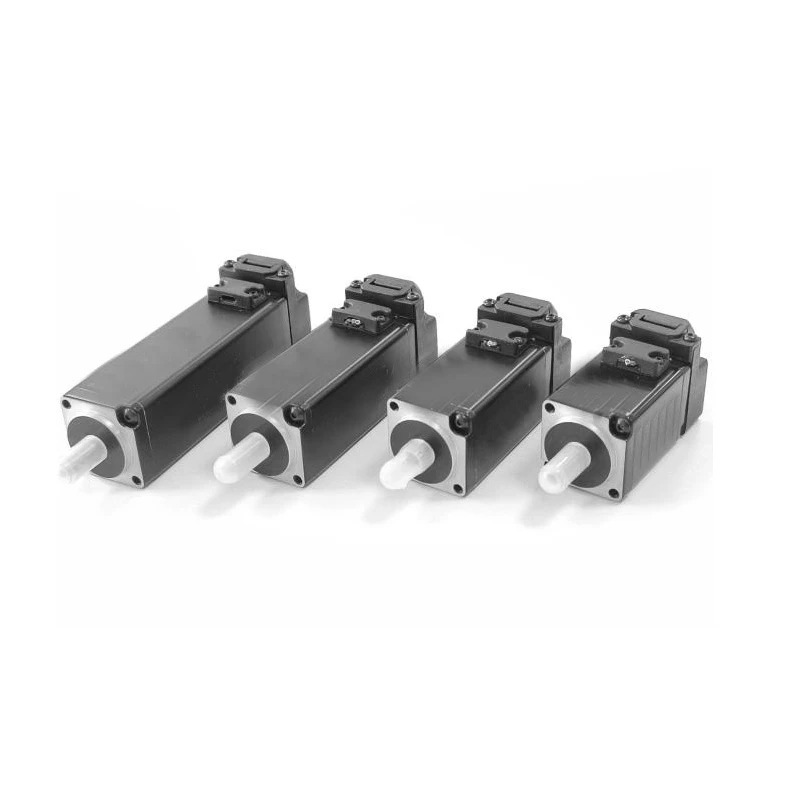
25D 11W 22W 33W 50W 48V Servo Motor
HANGZHOU, ZHEJIANG, CHINA, October 22, 2026 /EINPresswire.com/ --
As industrial automation, intelligent equipment, and energy-efficient appliances continue to develop, demand for reliable electric motor solutions is creating new opportunities for manufacturers worldwide. Hangzhou Jiangnan Electric Motor Co., Ltd. is participating in this evolving market through its motor manufacturing capabilities, product development activities, and experience serving industrial equipment and household appliance sectors. Based in Hangzhou, Zhejiang Province, the company produces several types of motors and presents a product portfolio that includes servo motors, permanent magnet synchronous motors, and compact motor solutions for different operating environments.
Electric motors remain essential components across modern manufacturing and everyday equipment. They convert electrical energy into mechanical motion and support applications ranging from ventilation and air treatment to industrial machinery, automated production systems, and precision motion control. As equipment manufacturers seek better energy efficiency, stable performance, and more flexible designs, motor suppliers are increasingly expected to provide products that match specific operating conditions rather than relying on a single standardized solution.
Within this environment, the role of a Top Servo Electric Motors manufacturer involves more than producing individual motor units. It requires attention to torque, speed, positioning accuracy, response time, thermal performance, mechanical structure, and compatibility with control systems. Hangzhou Jiangnan Electric Motor Co., Ltd. offers servo motor products intended for precision motion applications, alongside other motor categories that serve a wider range of industrial and equipment requirements.
Servo motors are commonly used where controlled movement and repeatable positioning are important. In automated machinery, a servo system can regulate movement according to feedback and control signals, allowing equipment to adjust position, speed, and acceleration. These capabilities are relevant to CNC machine tools, robotic arms, automated assembly equipment, and other systems in which movement accuracy influences productivity and product consistency.
The company's published servo motor range includes compact models as well as permanent magnet servo motor series in several frame sizes. The product information describes options with different rated power levels, torque characteristics, speeds, and protection ratings. Such variations allow equipment developers to evaluate motor specifications against the mechanical loads, operating cycles, and space limitations of their applications. Final motor selection, however, depends on the complete system design, including the drive, controller, feedback device, transmission, and installation environment.
One of the principal considerations in servo motor development is the balance between dynamic response and stable operation. Equipment that frequently starts, stops, reverses direction, or changes speed can place different demands on a motor than machinery running at a relatively constant speed. Low rotor inertia can help a system accelerate and decelerate rapidly, while suitable torque capacity and thermal management support performance under the intended load. Encoder feedback and compatible drive electronics also contribute to controlled motion.
For manufacturers integrating motors into equipment, technical coordination is therefore an important part of the procurement process. Rated voltage, current, speed, torque, mounting dimensions, shaft configuration, encoder specifications, and environmental requirements all need to be reviewed before a motor is selected. A supplier that can discuss these factors with customers can help reduce uncertainty during product development and equipment integration.
Permanent magnet synchronous motors are another important area of motor technology. These motors use permanent magnets in the rotor to establish a magnetic field that works with the stator's rotating magnetic field. Depending on the design and control system, permanent magnet synchronous motors can provide high efficiency, strong torque characteristics, and effective speed regulation. Their potential advantages make them relevant to industrial drives, specialized machinery, and selected transportation or appliance applications.
Hangzhou Jiangnan Electric Motor Co., Ltd. lists Pmsm Motors as part of its product portfolio. Its published product information includes models designed for different voltage, power, and speed requirements. Examples include motors described for medium- and high-speed drive scenarios and customized designs intended for low-speed, high-torque applications. These examples illustrate the range of operating conditions that permanent magnet synchronous motor technology can address, although the suitability of any individual model must be assessed against the specific requirements of the intended equipment.
Energy efficiency has become a major consideration in motor purchasing. Motors operate for extended periods in many industrial and commercial environments, meaning that energy losses can affect operating costs over the service life of equipment. Motor efficiency depends on factors such as electromagnetic design, winding configuration, core materials, mechanical losses, cooling, and the way the motor is controlled. Selecting a motor that matches the required load and operating profile can be as important as comparing headline efficiency figures.
Permanent magnet technology can reduce certain electrical losses associated with rotor excitation, but actual system performance depends on the complete design and operating conditions. For equipment manufacturers, evaluations may include efficiency across the expected speed range, torque delivery, thermal behavior, control compatibility, and maintenance requirements. These considerations are particularly important when motors are incorporated into machinery intended for continuous or repeated operation.
In addition to industrial motion-control products, compact motors remain important for appliances and equipment with limited installation space. Manufacturers of ventilation systems, bathroom heaters, air treatment products, and other household equipment often need motors that combine appropriate output with manageable noise, vibration, temperature rise, and physical dimensions. These applications can place distinct demands on insulation, airflow, sealing, materials, and assembly quality.
Hangzhou Jiangnan Electric Motor Co., Ltd. also offers Small Electric Motors for equipment and appliance applications. Its published product range includes motor types associated with ventilation fans, bathroom ventilation, air heaters, and plastic-encapsulated designs. The company describes applications across household appliances and industrial equipment, reflecting the varied environments in which compact motor technology is used.
Small Electric Motors can offer practical advantages when equipment designers need to reduce the overall footprint of a product. However, a smaller motor is not automatically suitable for every compact application. Engineers still need to consider the required output, starting characteristics, duty cycle, temperature conditions, noise limits, and mounting arrangement. A motor that is undersized for its load may overheat or operate inefficiently, while an unnecessarily large motor may increase cost and installation complexity.
Motor enclosure and protection design are also important in appliance and ventilation applications. Equipment may be exposed to humidity, dust, elevated temperatures, or restricted airflow. Plastic-encapsulated motor designs, where appropriate, can provide structural or environmental benefits depending on the material system and construction. The actual level of protection must be confirmed through the product's specifications and test results rather than assumed from the motor category alone.
Manufacturing consistency underpins all these applications. Electric motor production involves a series of interconnected processes, including component preparation, stator winding, rotor manufacturing, assembly, electrical connection, balancing where required, and performance testing. Small variations in winding quality, component dimensions, assembly alignment, or electrical characteristics can influence noise, vibration, efficiency, and operating life. Manufacturers therefore need process controls that support repeatability from one production batch to the next.
According to its company information, Hangzhou Jiangnan Electric Motor Co., Ltd. operates digital manufacturing equipment and testing facilities. The company describes the use of automated winding equipment, assembly lines, laser welding equipment, and an EMC testing laboratory. Its published information also refers to a production capacity of up to 12 million motors annually and more than 80 patented technologies. These figures and capabilities are company-reported details and provide context for its manufacturing operations.
Testing plays a central role in verifying motor performance before products are delivered to customers. Depending on the motor type and application, testing may cover electrical parameters, insulation, temperature rise, operating noise, vibration, mechanical balance, durability, and resistance to environmental conditions. Specialized equipment can help manufacturers identify deviations and assess whether finished products meet the relevant technical requirements.
The company states that it implements an ISO 9001 quality management system and carries out inspections throughout the production process, from incoming raw materials to finished products. It also reports ISO 14001 environmental management and ISO 45001 occupational health and safety management certifications. Its published information references product certifications or compliance marks that include China 3C, UL, cUL, CE, and RoHS. Buyers should confirm the precise certificate scope and the applicable model coverage when evaluating a motor for a particular market.
Research and development also influence the ability of a manufacturer to respond to changing application needs. New equipment designs may require adjustments to motor dimensions, torque, speed, voltage, wiring, or mounting interfaces. In other cases, a customer may need a motor adapted to a specific operating cycle or environmental condition. Close communication between the motor manufacturer and equipment developer can help establish the technical requirements before production begins.
Hangzhou Jiangnan Electric Motor Co., Ltd. describes its business as serving high-end equipment manufacturers and well-known household appliance manufacturers, with products exported to Europe and the United States. Its application areas include industrial manufacturing, home appliances, textile equipment, steel plant energy systems, aerial drones, and industrial robots. These sectors differ significantly in their operating conditions, making application-specific evaluation important when choosing a motor.
For industrial automation projects, the motor is only one part of the drive system. Mechanical transmission, motor drives, sensors, controllers, and machine software must work together to achieve the desired output. Engineers may need to assess whether a servo motor is appropriate for a precision positioning task or whether a different motor type is sufficient for a simpler continuous-motion application. The right choice depends on the required control accuracy, load characteristics, budget, and maintenance plan.
For household appliances, the priorities may be different. Noise, compact dimensions, electrical safety, energy use, and consistent operation can carry substantial weight in product development. Ventilation and air-treatment equipment may also require consideration of airflow, static pressure, mounting conditions, and exposure to moisture. Motor suppliers serving these markets need to account for both electrical performance and the practical environment in which the finished appliance will operate.
Supply coordination is another factor in motor procurement. Equipment manufacturers often work to production schedules that depend on the timely delivery of motors and related components. Clear specifications, sample evaluation, production planning, inspection records, and communication about delivery arrangements can help reduce disruption. When customized products are involved, confirming drawings, electrical parameters, interfaces, and acceptance criteria before mass production is particularly important.
Hangzhou Jiangnan Electric Motor Co., Ltd. provides contact channels for customers seeking motor selection and customization information. Its published service process describes technical communication before ordering, order-progress coordination during production, and after-sales support. For buyers comparing suppliers, practical questions include the availability of technical documentation, the process for confirming samples, production lead times, warranty conditions, spare parts, and the support available if operating requirements change.
As automation and energy-conscious equipment design continue to influence manufacturing, motor suppliers are likely to face demand for products that combine dependable performance with application flexibility. Servo motors support systems requiring controlled movement, while permanent magnet synchronous motors can serve applications where their efficiency and torque characteristics are suitable. Compact motor formats continue to play a role in appliances and equipment where space, noise, and operating conditions matter.
Against this background, Hangzhou Jiangnan Electric Motor Co., Ltd. brings together several motor categories under one manufacturing business. Its portfolio, including Pmsm Motors and Small Electric Motors, gives equipment developers options to investigate across industrial and appliance-related applications. The company's manufacturing equipment, testing resources, and reported quality management systems form part of its approach to serving customers with differing technical requirements.
For prospective buyers, supplier evaluation should focus on matching the motor's documented performance with the intended application. Reviewing specifications, confirming relevant certifications, testing samples where appropriate, and clarifying customization and service arrangements can help establish whether a product is suitable for a particular project. As motor-driven equipment continues to evolve, the ability to coordinate product design, manufacturing, testing, and customer communication remains an important consideration in the electric motor supply chain.
About Hangzhou Jiangnan Electric Motor Co., Ltd.
Hangzhou Jiangnan Electric Motor Co., Ltd. is a motor manufacturer based in Hangzhou, Zhejiang Province, China. The company specializes in motors for high-end equipment and smart home applications. Its product portfolio includes servo electric motors, permanent magnet synchronous motors, ventilation fan motors, bathroom heater motors, plastic-encapsulated motors, and other motor products for industrial and household equipment.
The company reports that it operates digital manufacturing equipment and comprehensive testing facilities, with automated winding and assembly equipment among its production resources. Its public company information cites a production capacity of up to 12 million motors per year, more than 80 patented technologies, and quality and environmental management systems including ISO 9001 and ISO 14001. It also describes supplying domestic equipment and appliance manufacturers and exporting products to overseas markets.
For buyers seeking motor products or customized solutions, Hangzhou Jiangnan Electric Motor Co., Ltd. provides further information about its product categories, manufacturing capabilities, and services through its official website: [www.jnelectricmotor.com]. The company’s range of motor technologies allows customers to explore options for precision motion control, industrial drives, ventilation, and other equipment applications according to their technical and commercial requirements.
Address: No.298, YaNan Road, Yaqian Town, Xiaoshan District, Hangzhou City, Zhejiang Province
Official Website: https://www.jnelectricmotor.com/
KangMing Fang
Hangzhou Jiangnan Electric Motor Co., Ltd.
sales@jnelectricmotor.com
Legal Disclaimer:
EIN Presswire provides this news content "as is" without warranty of any kind. We do not accept any responsibility or liability for the accuracy, content, images, videos, licenses, completeness, legality, or reliability of the information contained in this article. If you have any complaints or copyright issues related to this article, kindly contact the author above.
